Two sides, one system
Companies order; vendors cook. Employees browse the day's menu, place a single order, and add notes that travel to the kitchen — while the vendor gets a live manifest of exactly what's been sold.
Corporate lunch, pre-ordered — so the kitchen cooks what's already sold.
Fudo is a corporate lunch-ordering platform. Companies partner with food vendors; employees order the day's meal from their phone, managers approve, and the kitchen sees exactly what to cook and for whom. It replaces the usual mess of group chats, spreadsheets and someone walking round with a notepad — one place where lunch is ordered, approved and fulfilled. And it's ours: an in-house Jungle product, designed and built end to end.
Companies order; vendors cook. Employees browse the day's menu, place a single order, and add notes that travel to the kitchen — while the vendor gets a live manifest of exactly what's been sold.
One person can be an employee at their company and an owner at a vendor. Fudo asks which account you're using and reshapes the whole app around it — navigation, screens and permissions all follow the role.
A colleague in a meeting? Place their order for them. The one-order-a-day limit follows the person eating, not the one tapping, and Fudo shows who's already in so no one doubles up.
Ordering opens and closes on each company's schedule, and every order moves through clear states — placed, approved, completed. By the cut-off the kitchen has a final list, not a forecast.
A food-first interface built in Figma and shipped to code — every flow, state and edge case drawn as a real screen.
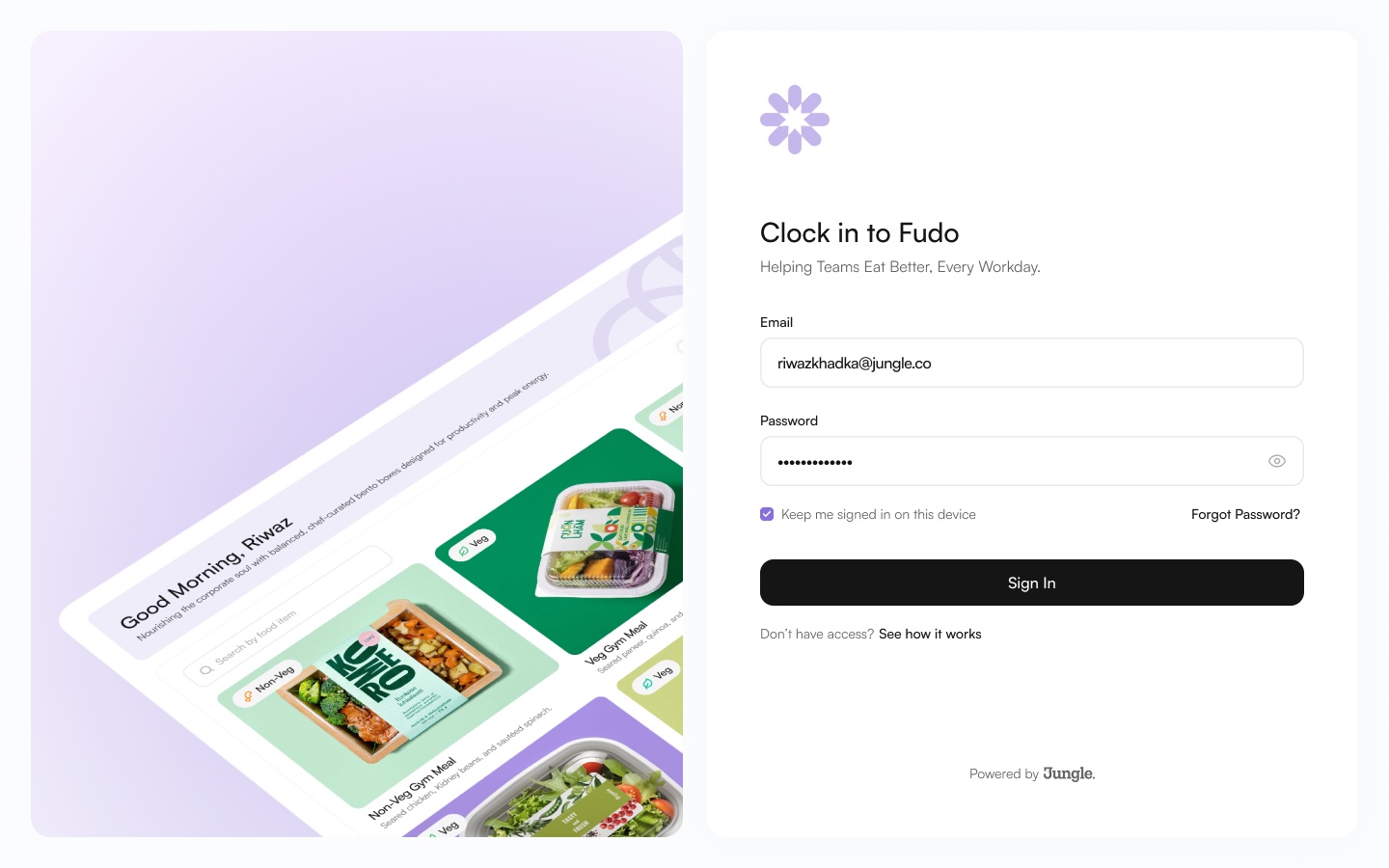
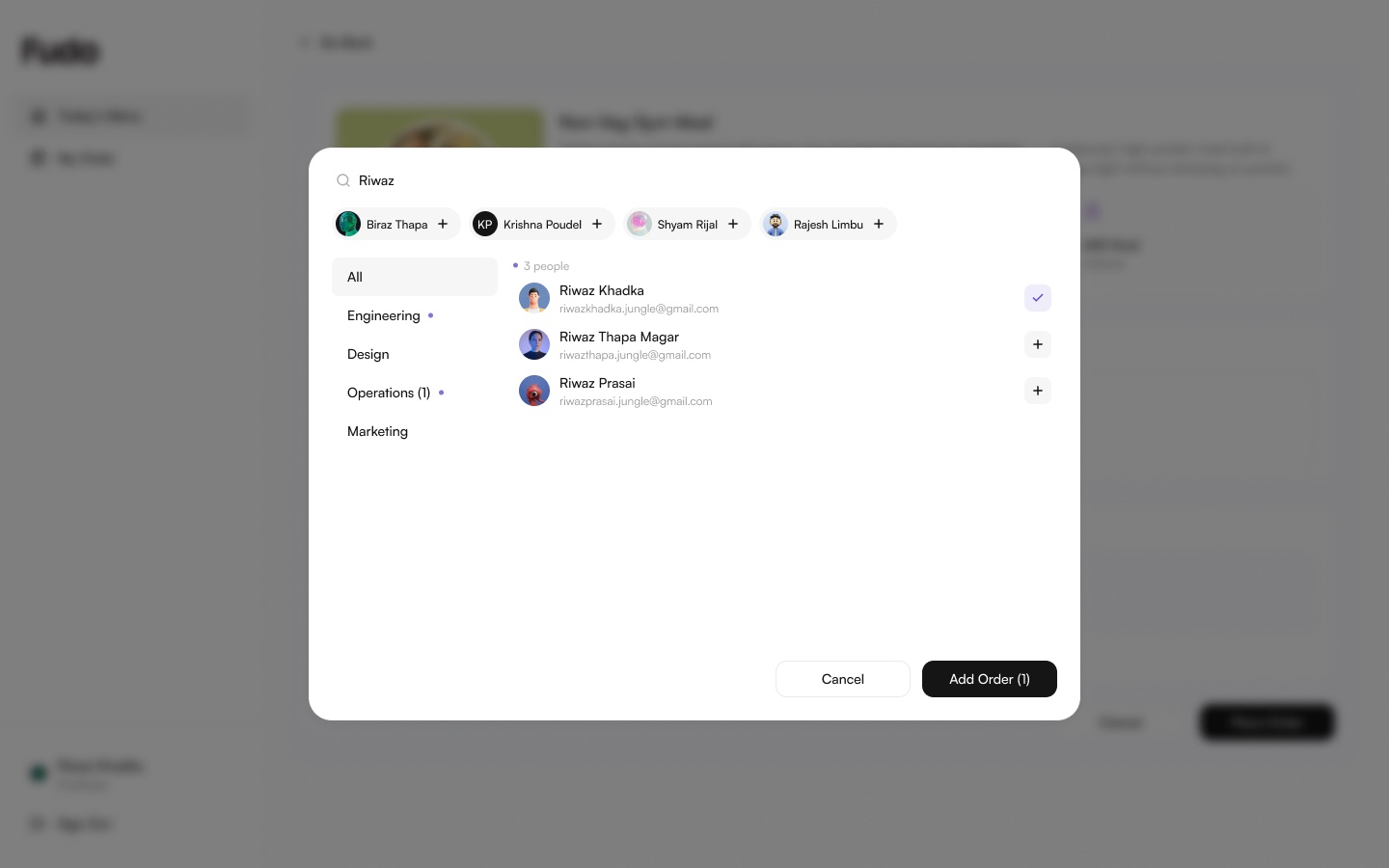
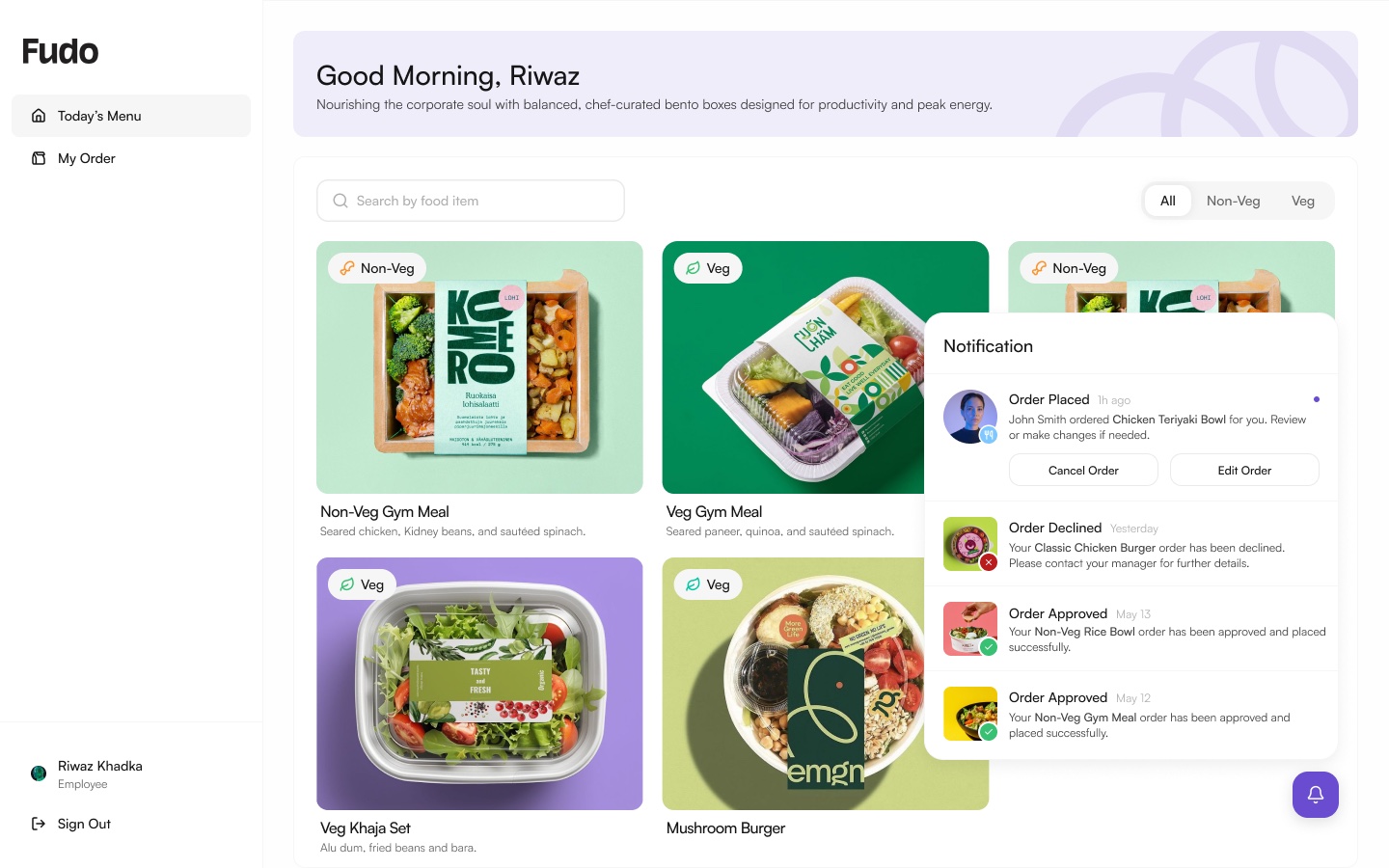
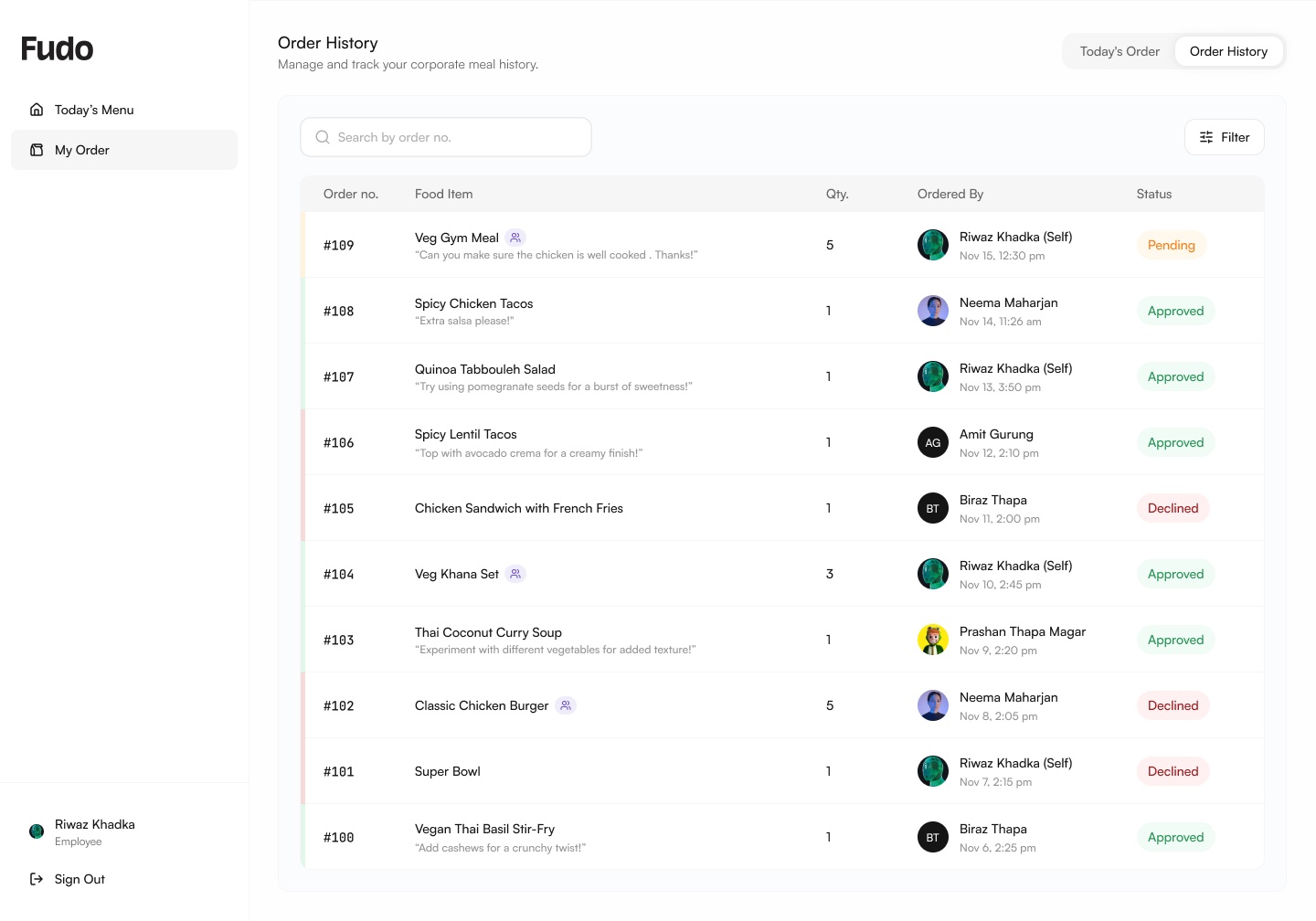
We mapped the whole domain first: two organisations, five roles, and the rules that govern a day of ordering — one order per person, a timed window, prices locked at the moment of purchase.
Those rules became flows and states before any pixels — the ordering window, the approval queue, order-for-a-teammate, and every empty and error state treated as a real screen, not an afterthought.
A calm, food-first interface in Figma: a warm purple system, generous cards that let the meals lead, and one component language shared across employee, manager and vendor views.
Shipped as three real apps — an Astro + React ordering app, a TanStack admin console, and a NestJS API on MariaDB — with role-based access enforced end to end.
Fudo is in active development. New screens ship behind the same design system and the same API contract, so the product keeps growing without drifting apart.
A typed, container-ready stack — React on the front, NestJS and Prisma behind it, role-based access shared across all three.
Fudo is an in-house Jungle product — design and build, end to end. Currently in active development.